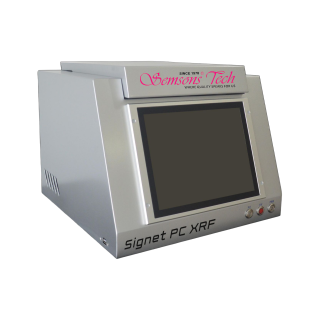
Gold Analyzer XRF Signet - PC
Request a quote
View Gold Analyzer XRF Signet - PC
Semsons Tech
Request a quote
Pricing depends on configuration, quantity and your requirements.
Portable Handheld XRF Gold Analyzer - Non-Destructive Karat Testing Machine
Reads the karat of a gold piece with no acid, no filing and no scratch. Hold it against the item and read the number off the screen.
✔ Shows the karat - 0 to 24K, straight off the screen
✔ No damage to the piece - nothing touches the gold but X-rays
✔ One power button - no sample preparation, no chemical to store
✔ Runs on a battery - no plug point needed at the counter
✔ Plated pieces read low - the beam goes deeper than ordinary plating
✔ Carry it to the gold - the counter, the strongroom, a branch visit
For jewellers, gold buyers, gold loan branches, refiners and hallmarking centres. On-site installation and operator training included.
WhatsApp +91 98216 12340 · Semsons Tech, since 1978.
Share your requirement and our team will send you pricing, availability and a quotation.
Security policy
Delivery policy
Return policy
Hold it against the gold, read the karat off the screen, hand the piece back unmarked.
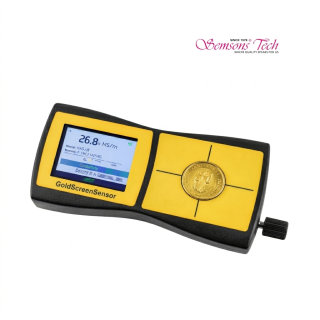
Acid testing means scratching the piece, keeping a bottle of acid behind the counter, and still settling for a karat that could be two or three either way. This analyzer reads the metal itself. You hold the nose of the gun against the item and the karat comes up on the screen. Nothing touches the gold, so the customer gets the piece back exactly as they handed it over. It runs on its own battery, which is the point of a handheld - the machine goes to the gold instead of the gold coming to the machine.
The gun sends a low-power X-ray into the surface of the piece. Every metal answers X-rays in its own way and sends back a signal of its own. The detector reads that signal and the software works out how much of what it is looking at is gold. From that it gives you the karat. The reading is a measurement of the metal rather than a judgement about it, and the piece is never marked.
X-rays reach only a small distance into metal - tens of microns, thinner than a sheet of paper. Every line below follows from that one fact, and it is worth knowing before you buy.
| What you are testing | What you get |
|---|---|
| Solid gold jewellery | The karat of the piece. This is what the machine is for. |
| Ordinary gold-plated brass or copper | Reads low. Costume plating is thinner than the X-ray reaches, so the base metal is part of the reading and the karat comes back nowhere near 22K. |
| Under-karat jewellery | 18K that is really 16K reads as 16K. There is no range left to argue about. |
| A piece with a deliberately thick gold layer | Reads as gold. Once the gold layer is deeper than the X-ray reaches, the analyzer cannot see what is under it. |
| A bullion bar that may hold a tungsten core | Not this machine, and not any surface X-ray machine. Tungsten weighs almost exactly what gold weighs, so the scale will not find it either. Use the Gold Coin Testing Machine for that job - it measures the metal's electrical conductivity, which reads below the surface, and gold and tungsten sit a long way apart on that scale. |
Rings, chains, bangles, necklaces and earrings, including pieces with stones set in them - you aim at the metal and leave the stone alone. Scrap and old gold bought across the counter. Gold coins and small bars, on the surface. Anything with a flat patch of metal large enough to rest the nose of the gun against.
Hallmarked Indian gold runs to fixed grades set by IS 1417, so a reading off the screen lines up against a short list:
| Karat mark | Gold content |
|---|---|
| 24K | 999 parts per thousand |
| 23K | 958 parts per thousand |
| 22K | 916 parts per thousand - the usual grade for Indian jewellery |
| 20K | 833 parts per thousand |
| 18K | 750 parts per thousand |
| 14K | 585 parts per thousand |
| 9K | 375 parts per thousand, added to hallmarking in 2025 |
| Parameter | Specification |
|---|---|
| Type | Handheld XRF gold analyzer |
| Technology | X-ray fluorescence (XRF), non-destructive |
| What it reports | Karat, on the screen on the gun |
| Karat range | 0 to 24K |
| Display | Screen on the body of the gun |
| Controls | Single power on/off button |
| Power | Rechargeable battery - no mains lead while testing |
| Sample preparation | None. No acid, no filing, no scratching. |
| Reading depth | Surface of the metal, tens of microns |
| Warranty | 1 year, extendable |
| Installation | On-site by a Semsons technician |
| Training | On-site operator training included |
No. Nothing touches the piece except X-rays. There is no scratching, no acid and no filing, and the customer gets the item back exactly as it was.
It is an X-ray device and it is handled like one. Keep the nose flat against the piece you are testing and keep it pointed at the metal, never at a person or at your own hand. A Semsons technician covers safe handling with your operator during the training that comes with the machine.
Acid leaves a mark on the piece, needs a chemical you have to store and handle, and still only puts the karat inside a band of two or three either way. This reads the metal and gives you a karat, with nothing left on the piece.
Yes. Aim at a clear patch of metal on the item and leave the stone alone. The stones do not need to be removed.
Ordinary jewellery plating, yes. Costume plating is thinner than the X-ray reaches, so the brass or copper underneath is part of the reading and the karat comes back low instead of at 22K. A deliberately thick gold layer is a different case - the table above sets out where the reading stops.
No, and no surface X-ray machine can. The X-ray reads only the top of the metal, so a tungsten core under a thick gold shell stays hidden, and the scale will not catch it either because tungsten and gold weigh almost the same. That job needs a different measurement, which is what the Gold Coin Testing Machine is for - it reads the metal's electrical conductivity rather than its surface, and gold and tungsten are far apart on that scale.
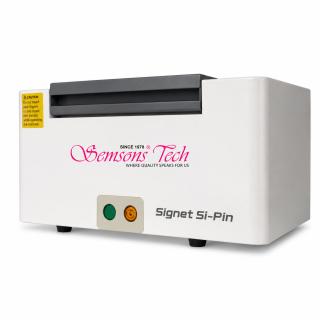
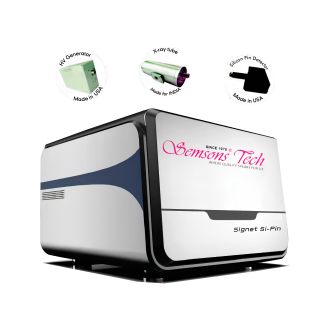
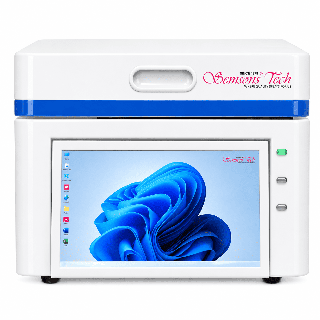
The Signet range are counter machines. You put the piece into the machine, and a built-in computer and screen give you the karat with the metals of the alloy listed beside it. This is a gun you carry to the piece instead, with the karat on its own screen. Take this one when the gold turns up in places a counter machine cannot go. Take the Gold Analyzer XRF Signet - PC or the Signet Si-Pin with Touch Screen when all the testing happens at one counter and you want the fuller reading on a bigger screen.
No. It runs on its own battery and it sits in your hand. There is nothing to wire in and nothing to build.
No. For your own buying, pledging and stock decisions the karat on the screen is your answer. A BIS hallmark comes from a recognised assaying and hallmarking centre, where XRF is one of the methods laid down and fire assay settles anything borderline.
Yes. A Semsons technician hands the machine over on site, trains your operator on it and covers safe handling.
Aiming at the wrong spot, mostly - a stone, a solder join, or a worn patch on a plated piece instead of clean base metal. A dirty or coated surface does the same thing, because the analyzer reports the metal it can see. Flat, clean metal gives you the reading you want.
Price is quoted per configuration. Send us a WhatsApp message with the kind of gold you test and roughly how many pieces a day, and we will quote the right unit. On-site installation and operator training are included. 1 year warranty, extendable with an annual maintenance contract. EMI options are available through partner banks. Service across 16+ Indian cities.
Sales: WhatsApp +91 98216 12340 | Wholesale: WhatsApp +91 80823 38010
Semsons Tech - Where Quality Speaks For Us. Since 1978.
Items this product is listed as working with.
Request a quote
View Gold Analyzer XRF Signet - PCRequest a quote
View Gold Analyzer XRF Signet FSDDRequest a quote
View Gold Analyzer XRF Signet Si-Pincheck_circle
check_circle